Stile Galante organises academic conferences in collaboration with different universities and promotes the publication of monographs and proceedings via its own editorial activity.
—
STUDIES ON VOCAL MUSIC SERIES
Musicological and Historical Studies on Singers, Voices and Vocal Repertoire
*
Scientific Board
Stefano Aresi (Norsk Teknisk Naturvitenskapelig Universitet)
Melania Bucciarelli (Norsk Teknisk Naturvitenskapelig Universitet)
Rosa Cafiero (Università Cattolica del Sacro Cuore di Milano)
Andrea Massimo Grassi (Accademia del Teatro alla Scala)
Lorenzo Mattei (Università degli Studi di Bari Aldo Moro)
*
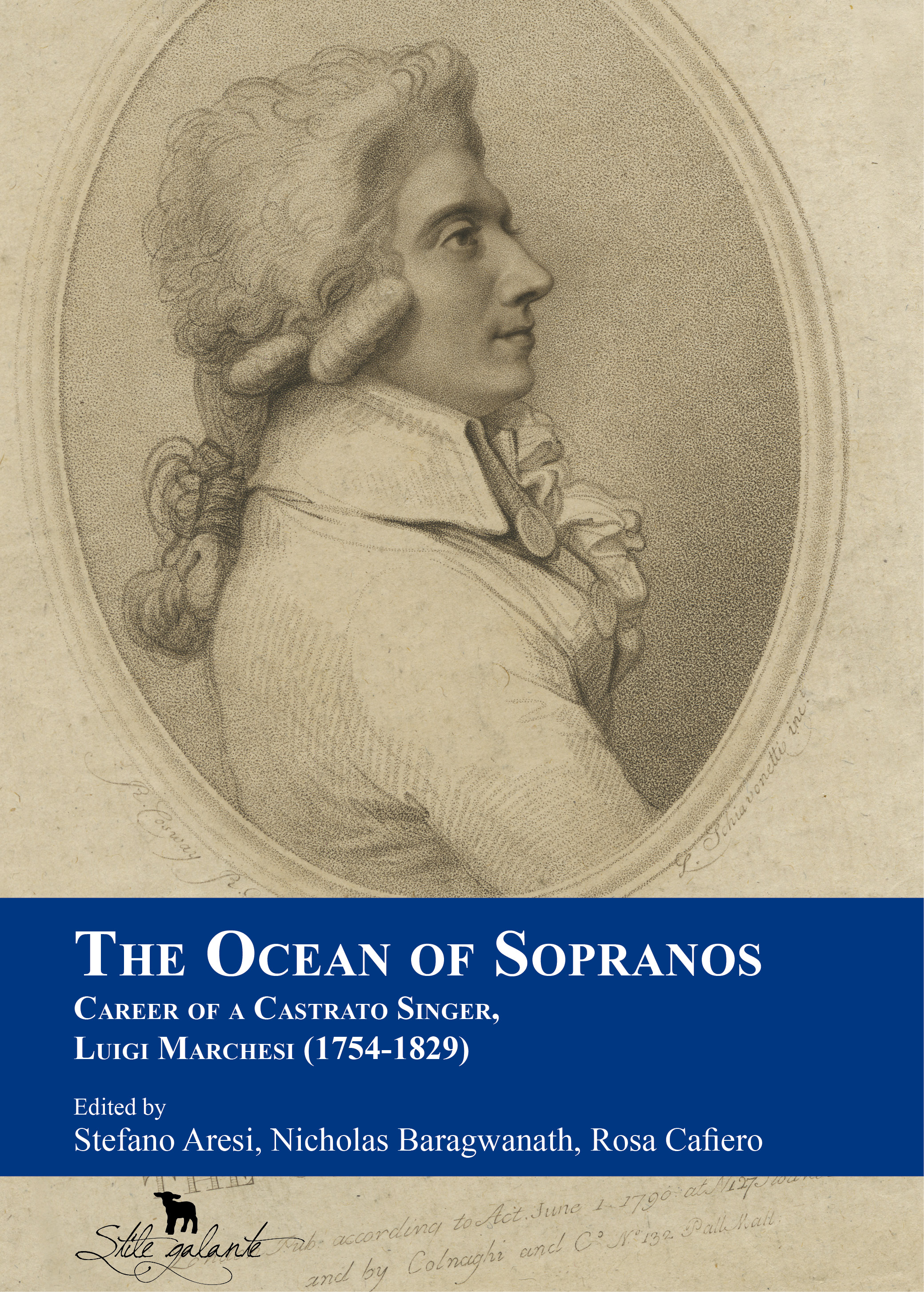
The Ocean of Sopranos: Career of a Castrato Singer, Luigi Marchesi (1754-1829)
Ed. by Stefano Aresi, Nicholas
Baragwanath, Rosa Cafiero
Engl., 360 pp., soft cover – 45,00€
isbn: 978-90-828151-2-2
Available from: March 2024
Content Info
Luigi Marchesi (1754-1829), «The Ocean of Sopranos» — as Benedetto Frizzi called him — was one of the most famous and most popular singers of late-eighteenth-century Europe, an outstanding star who lit up the musical world from the ancien régime to the Napoleonic Age. Endowed with a voice that encompassed an exceptionally wide range, and with a celebrated taste for acrobatic singing and extravagant embellishments, Marchesi soon became an almost mythological character.
– Anne Desler, Introduction
– Nastasja Gandolfo, The role of Luigi Marchesi in Josef Mysliveček’s Ezio for the Munich court (1777)
– Annarita Colturato, Luigi Marchesi as Court Singer
– Giovanni Polin, «Always true to his own reputation in delighting and surprising»: notes about the career of Luigi Marchesi in the Venetian Republic
– Simone Laghi, Luigi Marchesi’s performances in London: Castrati and the ‘true taste’
– Nicholas Baragwanath, Castrato as Composer: Revisions for Marchesi’s London Debut as Giulio Sabino (1788)
– Roberto Scoccimarro, Luigi Marchesi as Achille: Adaptations of a rondo from Cherubini’s Ifigenia in Aulide in Turin, Milan and London
– Paolo Russo, An Opera for a ‘rhapsodic poet’: Il disertore by Tarchi and Marchesi
– Giacomo Sances, «Our great Gipsy friend must be proud of such a fine student»: Luigi Marchesi and his «sincere feeling» for Bellini
– Stefano Aresi, Elements towards the understanding of Luigi Marchesi vocal skills
– Livio Marcaletti, Luigi Marchesi’s Variazioni between Conventional Graces and Extraordinary Virtuosity, in the Light of Contemporary Vocal Treatises
– Luca Benedetti, Mayr, Marchesi and Pugnani in Venice: a source from the Biblioteca ‘Angelo Mai’, Bergamo
– Rosa Cafiero & Livio Aragona, From Lodoiska to Lovinski: Camilla Balsamini stepping into Marchesi’s shoes
– Facsimiles , Bibliography, Index
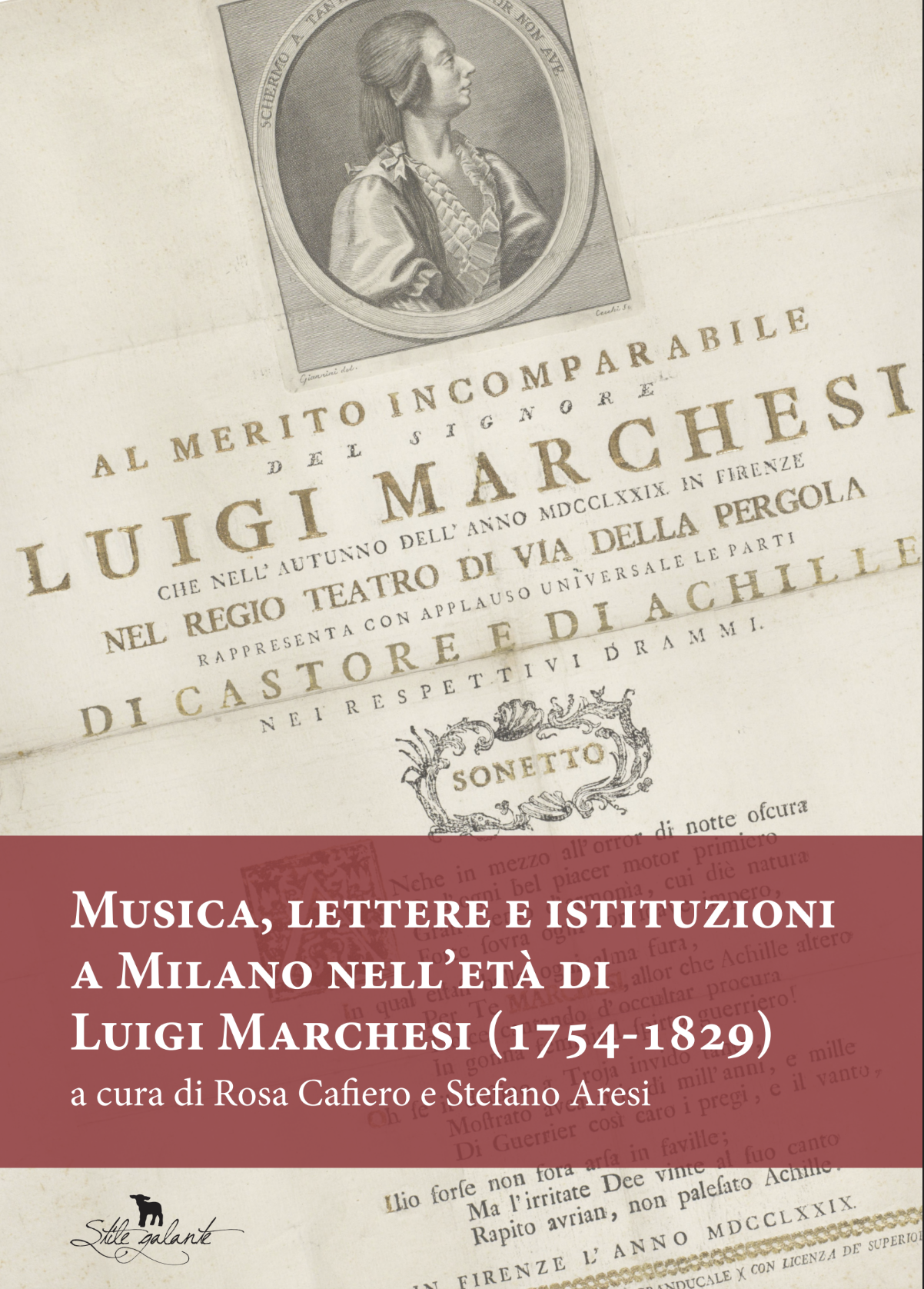
Musica, lettere e istituzioni a Milano nell’età di Luigi Marchesi (1754-1829)
Ed. by Rosa Cafiero and Stefano Aresi
Ita., 220 pp., soft cover – 20,00€
isbn: 978-90-828151-1-5
Published: March 2021
Content Info

Il cantar sodo: Le Manieren di canto nella didattica tedesca dal Seicento all’Ottocento
Livio Marcaletti
Ita., 326 pp., soft cover – 45,00€
isbn: 978-90-828151-7-7
Available from: March 2025
Content Info
Come interpretare il canto solistico dell’epoca di Händel, Mozart o Rossini? Non solo con passi di coloratura virtuosistici per variare una melodia già esposta: un’esecuzione espressiva richiedeva il costante uso di accenti, glissandi e piccoli ornamenti detti Manieren, oggi perlopiù dimenticati. Il presente volume ne ripercorre la storia sulla base della didattica tedesca tra Seicento e Ottocento.
—
THE STUDENT’S FRIEND
Manuals for students and performers
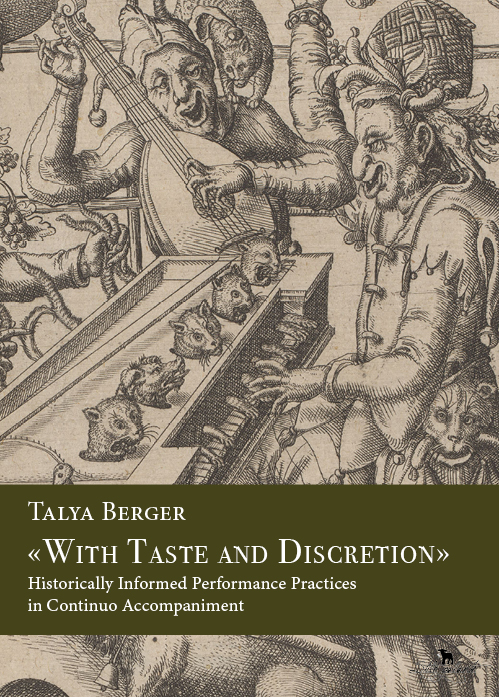
With Taste and Discretion: Historically Informed Performance Practices in Continuo Accompaniment
Talya Berger
Eng., 304 pp., soft cover – 35,00€
isbn: 978-90-828151-3-9
Available from: September 2024
Content Info
The art and practice of continuo accompaniment from figured and unfigured bass parts developed in the Italian states at the turn of the seventeenth century, spreading rapidly throughout Europe and England. For over two centuries continuo accompaniment was a central aspect of music performance. This book provides a comprehensive presentation of all aspects of vocal and instrumental music accompaniment accounting for place, space, time, and purpose of the music being accompanied.
Talya Berger is a member of the music faculty at Stanford University where she teaches music theory, analysis, and thorough bass accompaniment. Among her other publications are scholarly editions of Benedetto Marcello’s Cassandra (A-R Editions) and Varia Musica Sacra: Composizioni a 2-8 voci e organo dai codici di Palazzo Altemps (SEdM).
 Stile Galante
You must be logged in to post a comment.